Case study / Telecom project
From scattered alarms to the part that needs attention.
An alarm fires. A ticket opens. A truck rolls. By then, subscribers may already have lost service. The warning signs often existed earlier: a draining battery, a warming cabinet, a microwave link with a rising error rate. This project brings those signals together and follows them through the network.
Read the early warnings together.
The Network Operations Twin mirrors alarms, incidents, CMDB records and the dependency graph into Microsoft Fabric. Sites, sectors, backhaul links, subscribers and dependent business services become part of the same live 3D model. Mirroring brings that operational data across without a separate chain of ETL and scheduled copy jobs.
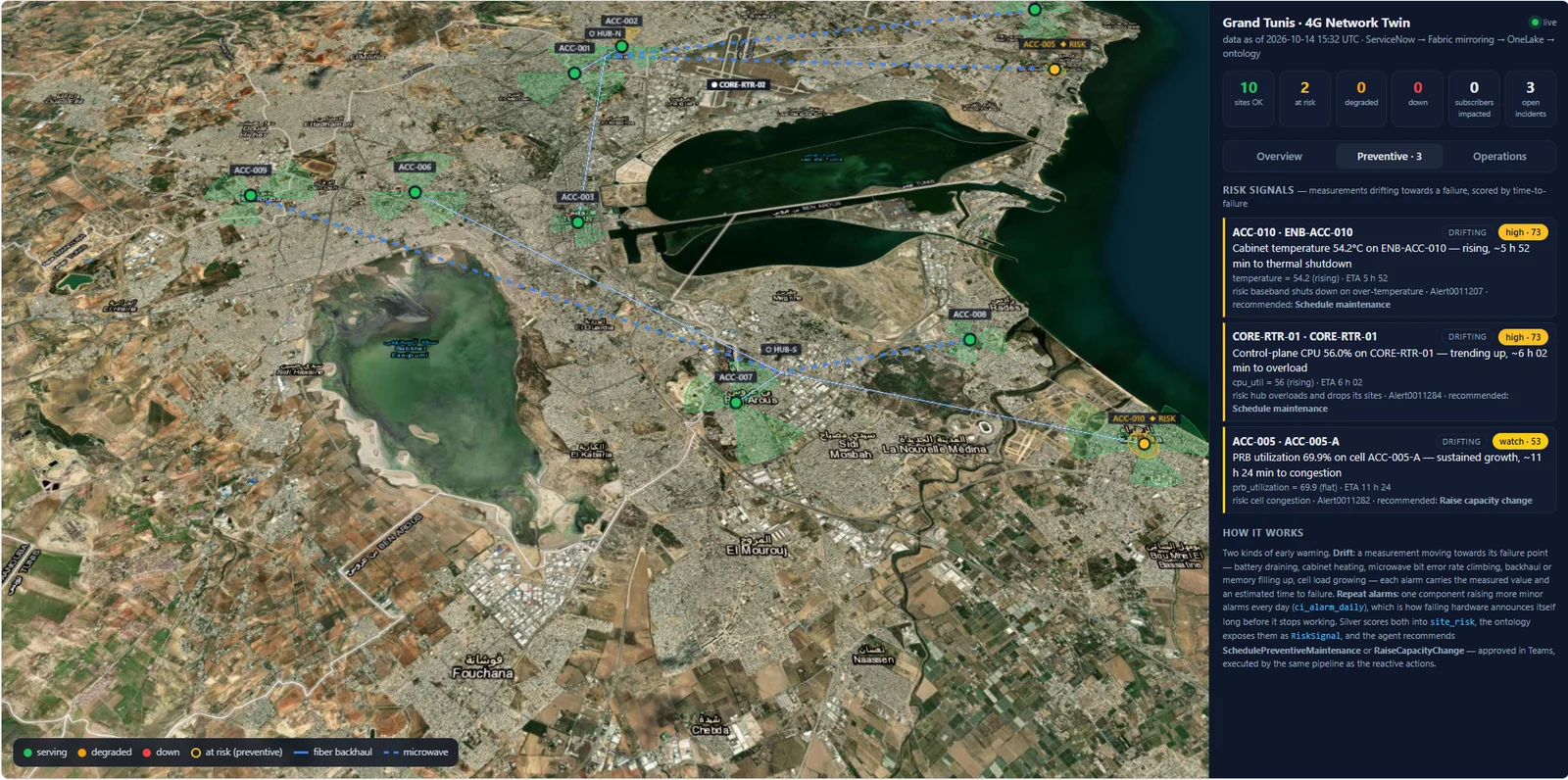
The platform considers both the current signal and its history. A feeder raising a few more minor alarms each week tells a different story from a single isolated alarm. Risk scoring identifies what is drifting towards failure and estimates how long it has left, giving the operations agent a basis for recommending an intervention.
Follow the dependencies, not just the alarms.
When an incident occurs, the twin brings its blast radius into view: the sites, subscribers and services affected. The dependency graph helps explain why several alarms may point back to one failing component.
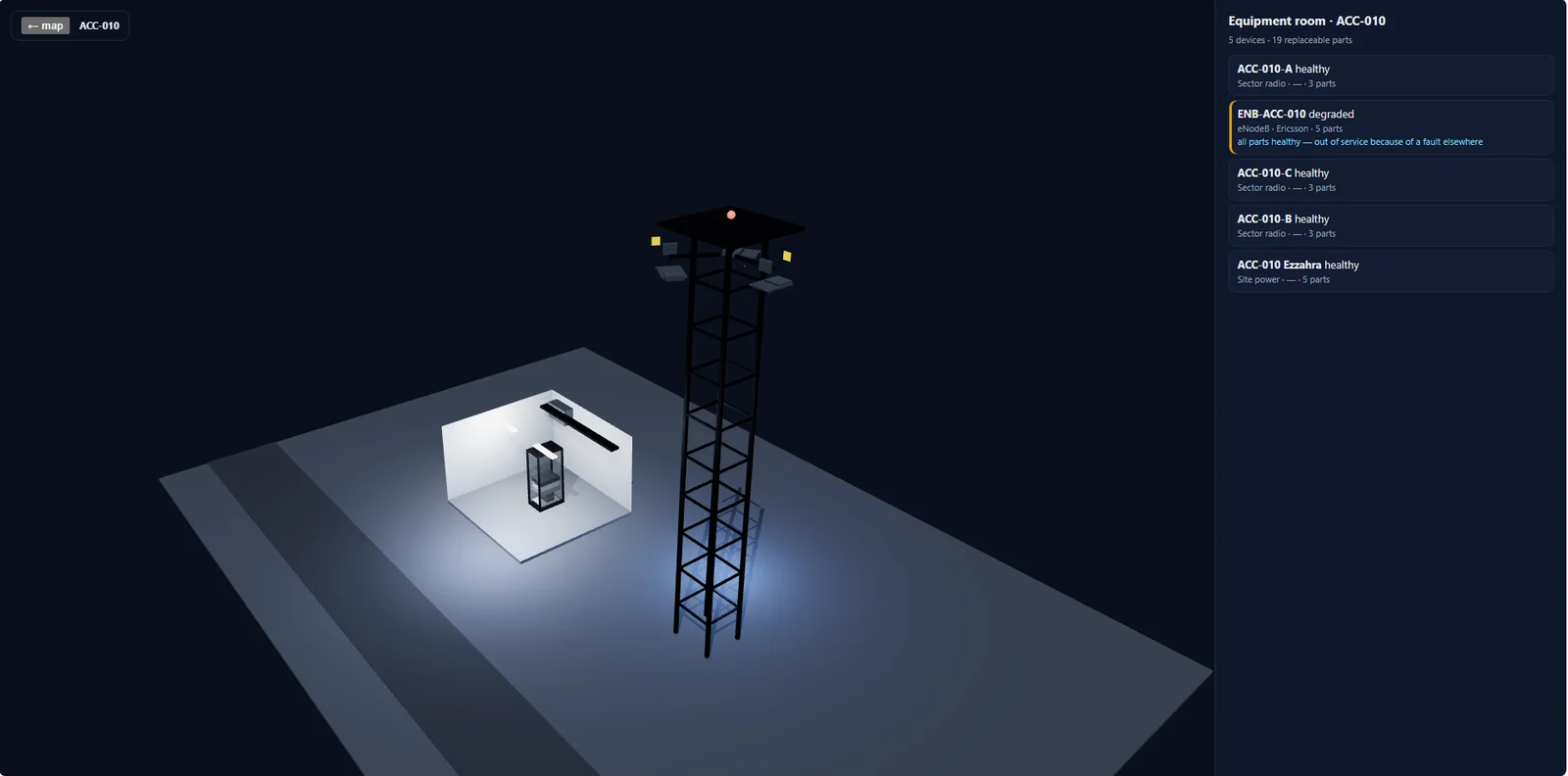
The operator can move from the network into an individual site and its equipment room. A site that appears degraded may depend on faulty equipment elsewhere. That distinction matters when deciding where an engineer actually needs to go.
Find the exact component before dispatch.
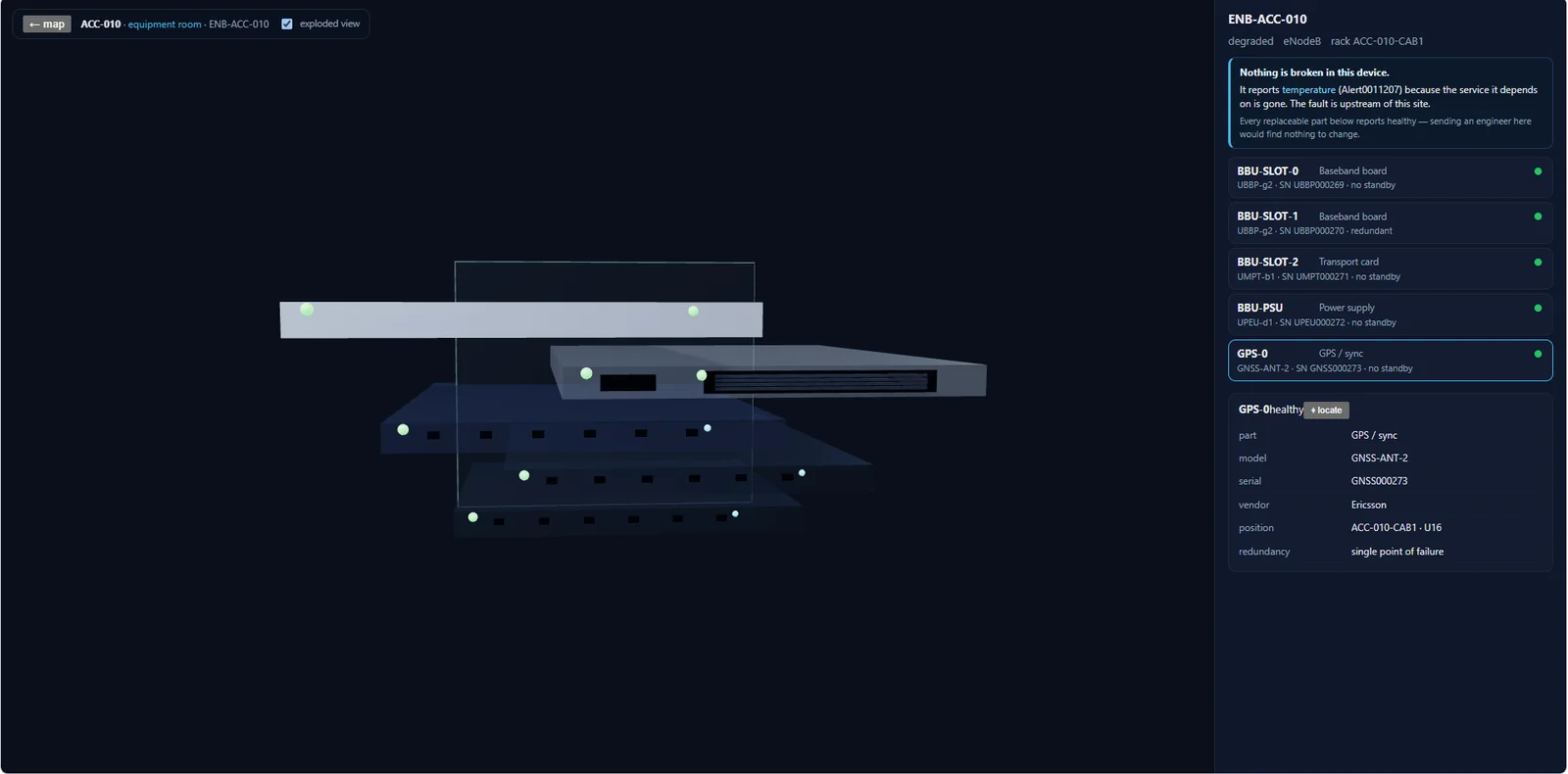
From the equipment room, the twin opens the rack and exposes the relevant component. Part number, serial number, rack position and standby availability give the engineer a much more precise picture of the work ahead.
That detail supports a practical handoff: identify the failing part and take the right spare before leaving the depot. The journey runs from the network-wide incident to the physical component that needs attention.
Recommend the action. Keep the engineer in control.
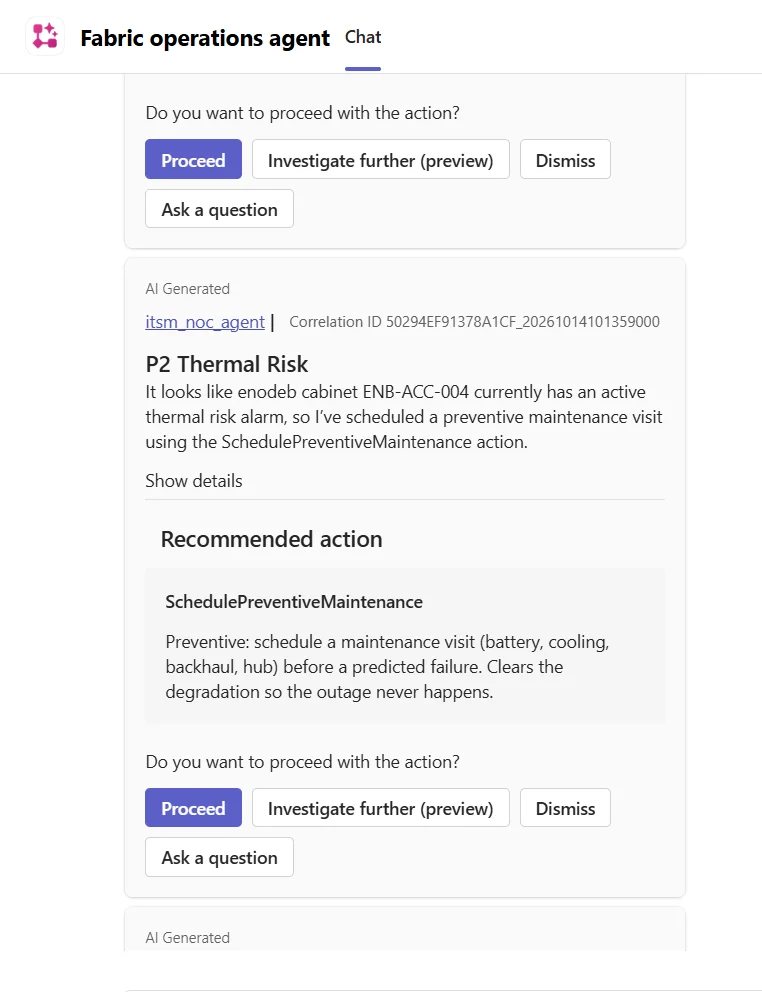
The AI operations agent watches the live signal and its history. It can recommend dispatching a team, scheduling maintenance, escalating an issue or adding capacity. The recommendation is posted to Teams for an engineer to review.
The agent waits for approval. The network is not changed without a person agreeing to the action. This keeps the investigation, recommendation and human decision connected while preserving operational control.