Case study / Manufacturing project
From production records to the factory floor.
The data was already there: lines, machines, fitted parts, suppliers, production orders and quality checks. The challenge was making it useful to the people standing on the floor. This project turns those records into a production line operators can explore, monitor and question.
First, give the data a shared foundation.
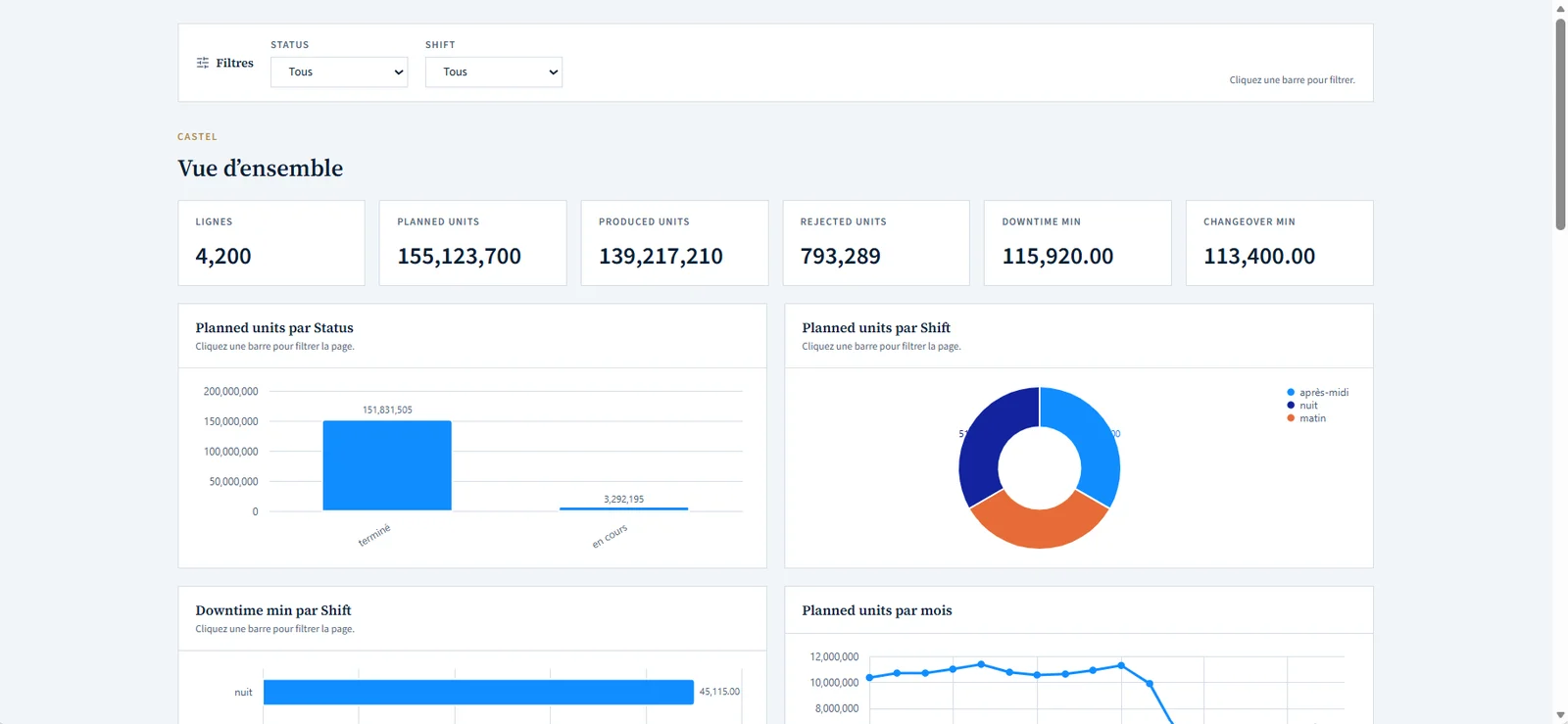
Industrial sites hold detailed operational information in relational databases. A machine record, a work order and a quality check each explain something about the line. To support a useful twin, those relationships need to be available together.
The solution ingests that data into Microsoft Fabric and structures it through bronze, silver and gold layers in OneLake. A semantic model and an ontology are derived from the source schema itself. This creates the governed foundation for both analytics and operational intelligence.
Then, walk the line. Inspect the part.
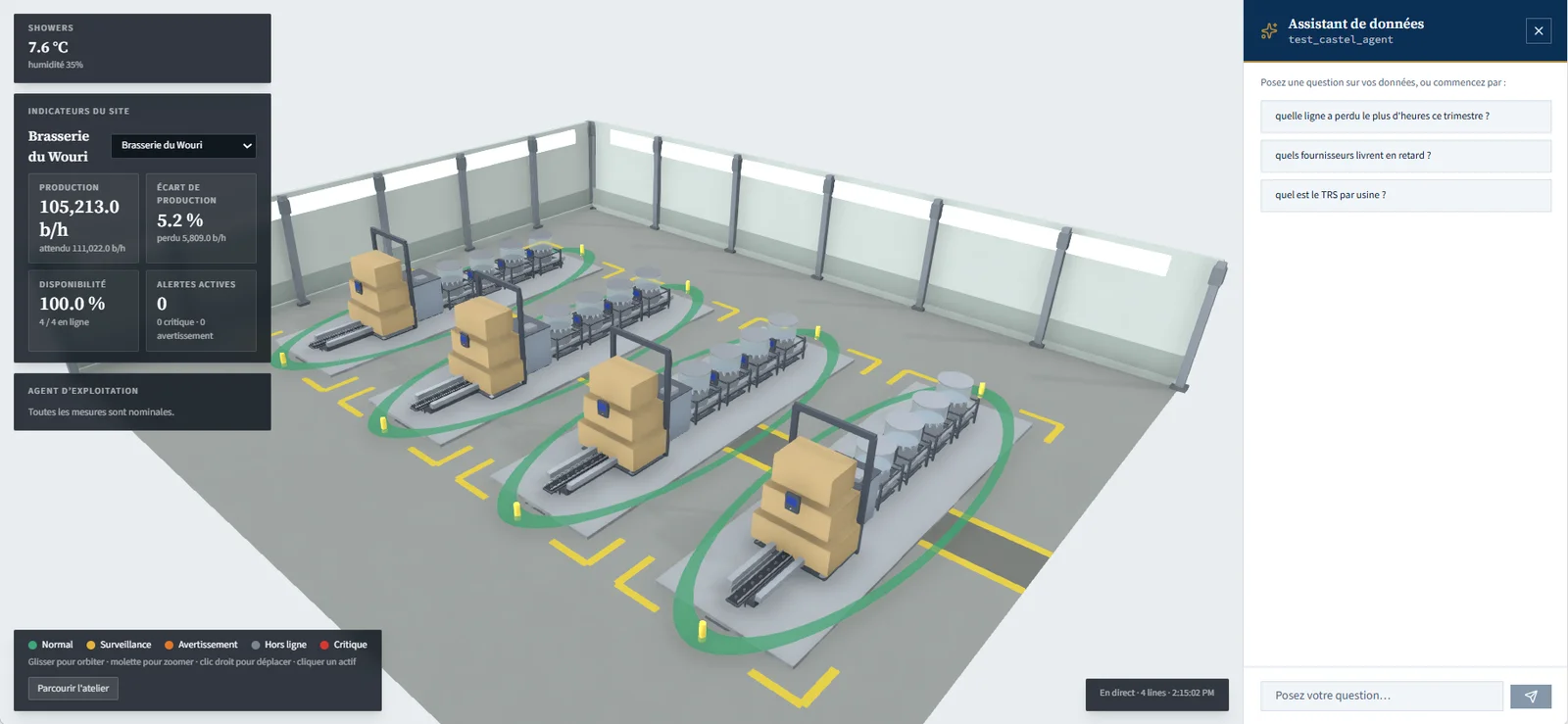
On that foundation, the project builds the production line station by station. Each stop named in the bill of materials is represented as the machine it actually is. The shapes follow the customer’s own part names.
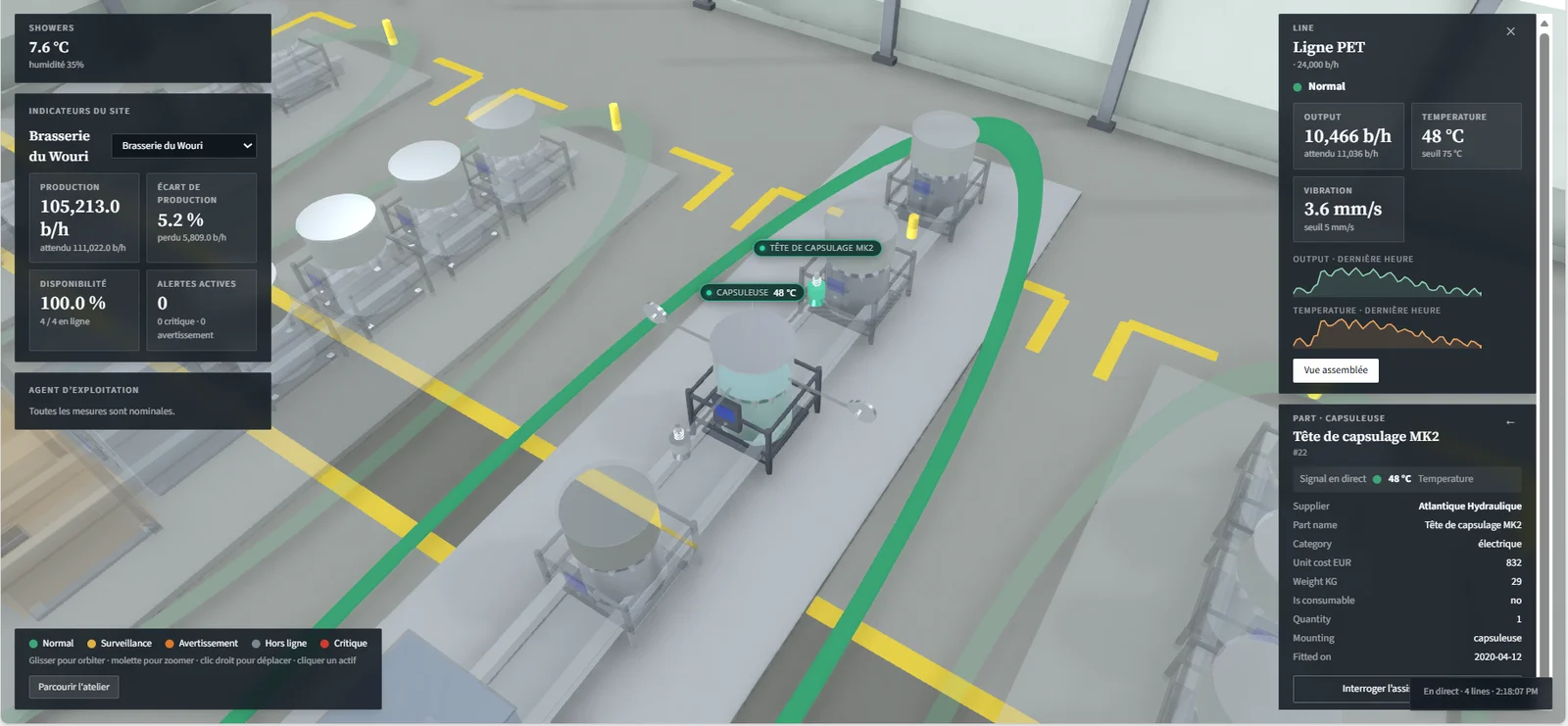
Operators can go one level further into the components fitted to a station: pumps, seals, cams, nozzles and sensors. The line becomes a navigable view of the equipment and its relationships, with a path from the whole operation to an individual part.
See the signal. Ask what it means.
Real-time telemetry streams into the scene through Eventhouse. Output per hour, temperature and vibration show both production performance and equipment condition. When a threshold is passed, the affected machine changes state in the 3D scene and an alert is raised in the application.
An AI agent sits beside the twin. It answers contextual questions about anomalies, thresholds and machine behaviour, grounded in the same governed model. The operator can move from seeing a condition to asking about it without losing the context of the line.