Case study / Energy project
One fleet. Two systems. A clearer decision.
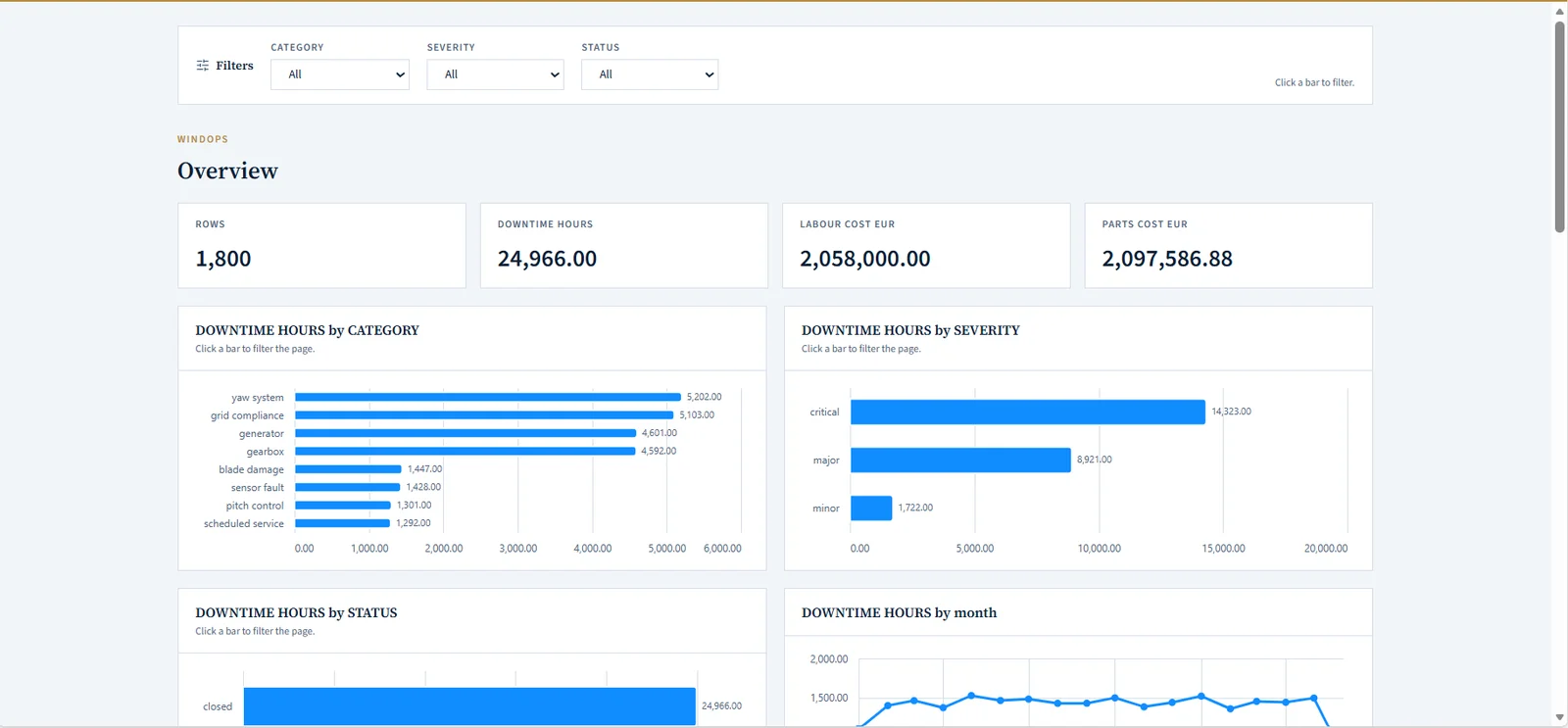
A wind fleet stretches across many sites. The information needed to keep it running is spread across systems too. One holds assets, fitted parts, work orders and technicians. Another holds suppliers, deliveries and spare parts. This project brings them into the same operational view.
Bring the systems together, on their own terms.
The two sources do not update in the same way. The operational database is mirrored continuously. Supply-chain information is copied on a schedule through a pipeline. The integration follows what each system allows.
Both sources land side by side in OneLake. They are reconciled into a single governed model, so an asset, a site and a part mean the same thing whichever system they came from. Microsoft Fabric provides the foundation for reading the operational and supply-chain context together.
Put condition back on the map.
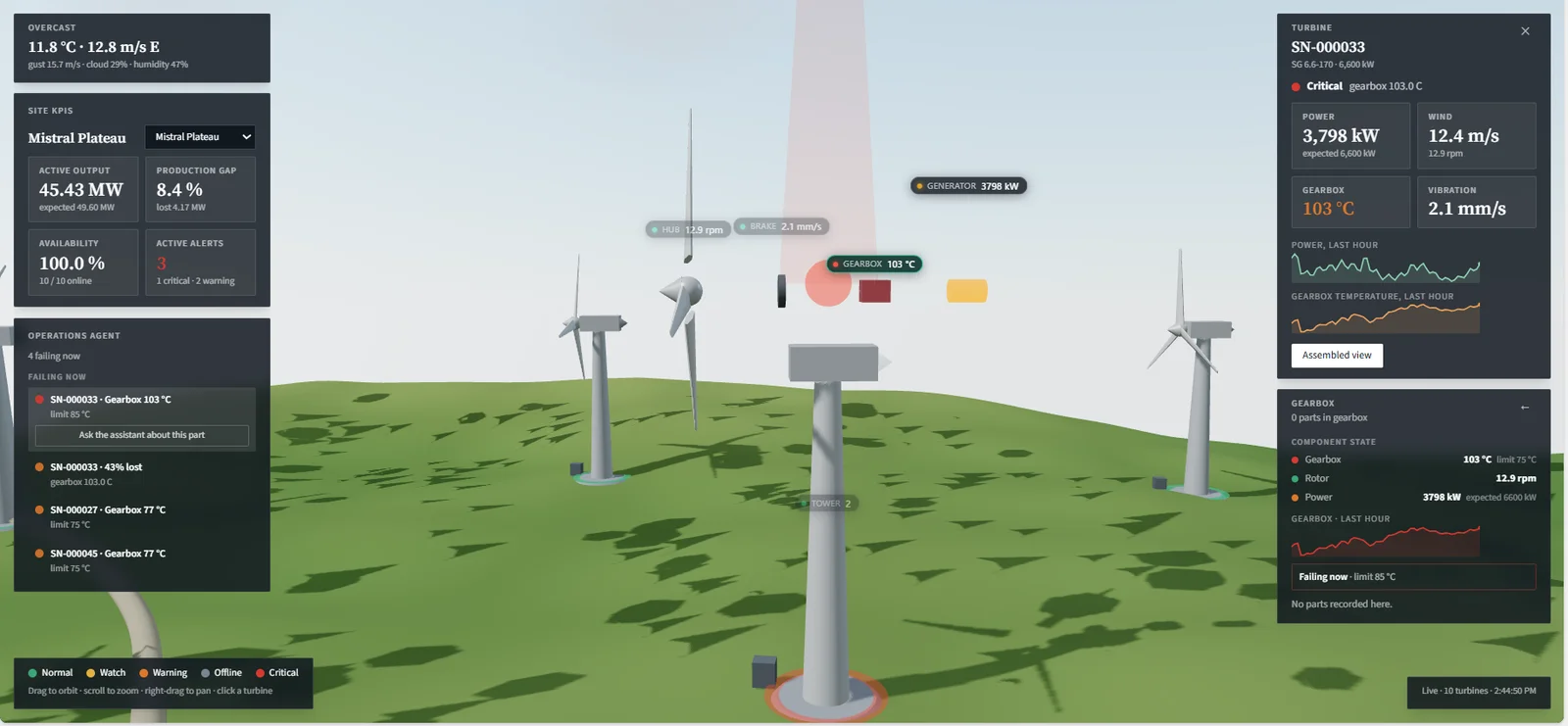
The twin places each asset where it actually operates. The fleet is legible across its terrain, so an operator can read site-wide condition at a glance and then inspect an individual turbine.
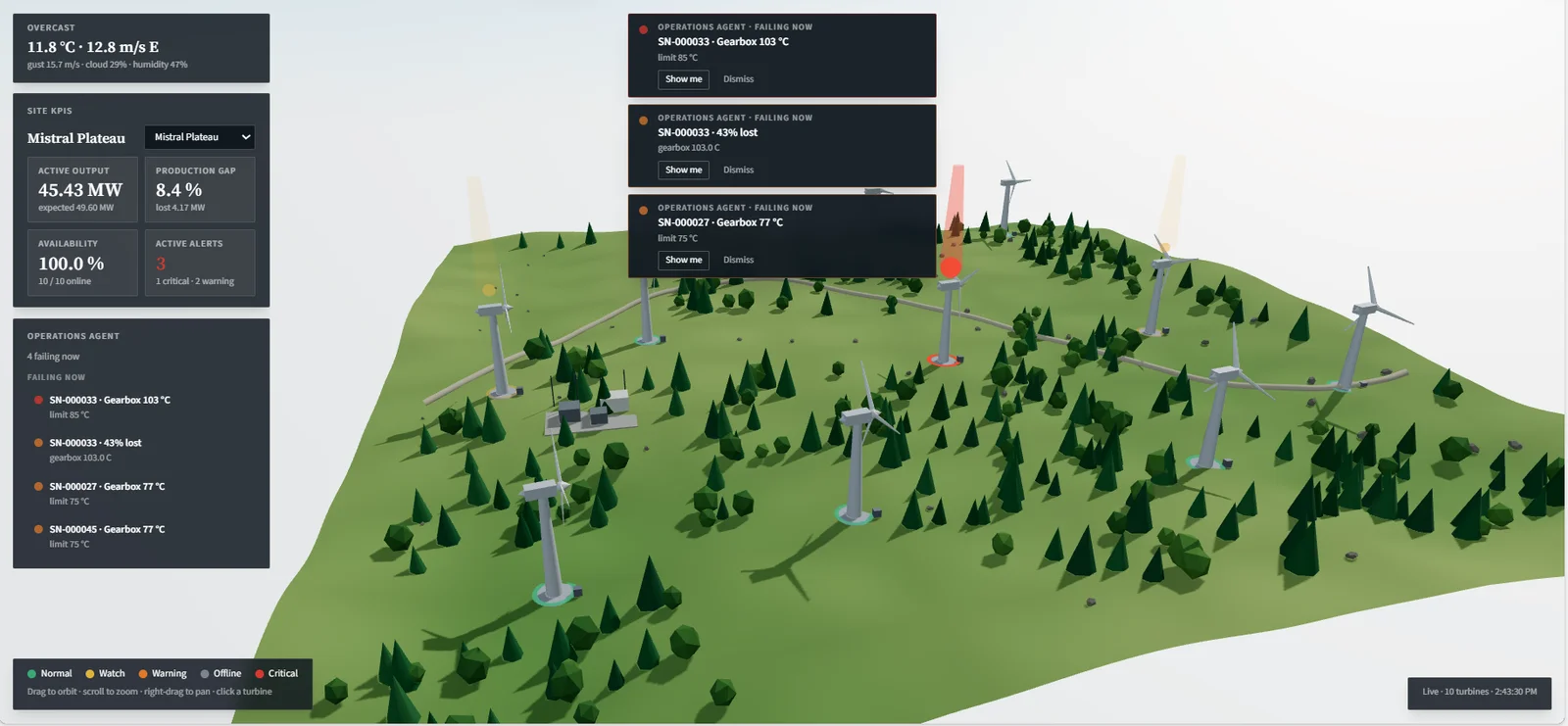
Live readings sit alongside weather context and a risk view. When a threshold is breached, the asset changes state in the scene and an alert is raised. The warning is attached to the equipment and location it concerns.
Follow the alert to the missing context.
Knowing that an asset is down is only part of the decision. The explanation may sit in a work order, a fitted part or a delivery that has not arrived. That is why the two systems are joined.
The AI agent beside the twin can answer across operations and supply chain at once. It connects the question about the asset to the information needed to understand it, while the operator can inspect the turbine and its condition in the scene.